

The Danube…Europe’s Long Memory By Roderick Eime
21/09/2026Castles emerge from the winter mist, Roman tombs lie beneath modern streets and old capitals glitter for Christmas as Roderick Eime follows the Danube through the turbulent heart of Southeast Europe.
The two immobile “prisoners” sit silently on a rough wooden bench, condemned to eternity behind a screen of ancient iron bars. Their clothes are ragged, their cell is cold and whatever crime brought them here has long since been forgotten.
However, deep in the dank bowels of Baba Vida fortress, there is plenty to remind us that medieval justice was seldom troubled by mercy. The cells, weapons and thick stone walls belong to a time when this corner of Europe changed hands with exhausting regularity, and a strong castle was often the only thing standing between a city and complete annihilation.
Outside, I climb the metres-thick ramparts and look across the Danube towards Romania. The broad river slides past with deceptive calm, but from up here the strategic value of Vidin is obvious. Whoever controlled this fortress controlled one of Europe’s great highways.
And if there is one recurring motif on AmaWaterways’ ‘Gems of Southeast Europe’ itinerary, it is castles. Castles on cliffs, castles beside towns, castles half-hidden in fog and castles dressed for Christmas as if strings of fairy lights might somehow excuse centuries of bloodshed.
The Danube runs for about 2,850 kilometres from Germany’s Black Forest to the Black Sea, passing through or alongside ten countries. For millennia, it has carried merchants, armies, pilgrims, grain, wine, weapons and ideas. It has served as road, border, battlefield and lifeline, sometimes all at once. No wonder everyone wanted it.
During our chilly November passage, the river’s fortresses take on a suitably theatrical appearance. Towers and battlements rise from the mist like stage scenery, dark and brooding against a pewter sky. Yet many are now festooned with electric tinsel, cheerful stars and blinking reindeer in preparation for Christmas.
The effect is charming, if slightly incongruous. These were not fairy-tale castles populated by gallant knights and princesses with impractical hair. They were built from stubborn quantities of rock to repel equally stubborn invaders. Their stories are filled with despotic rulers, besieged townspeople, severed alliances and an alarming variety of sharp objects.
Ramparts In The Mist:
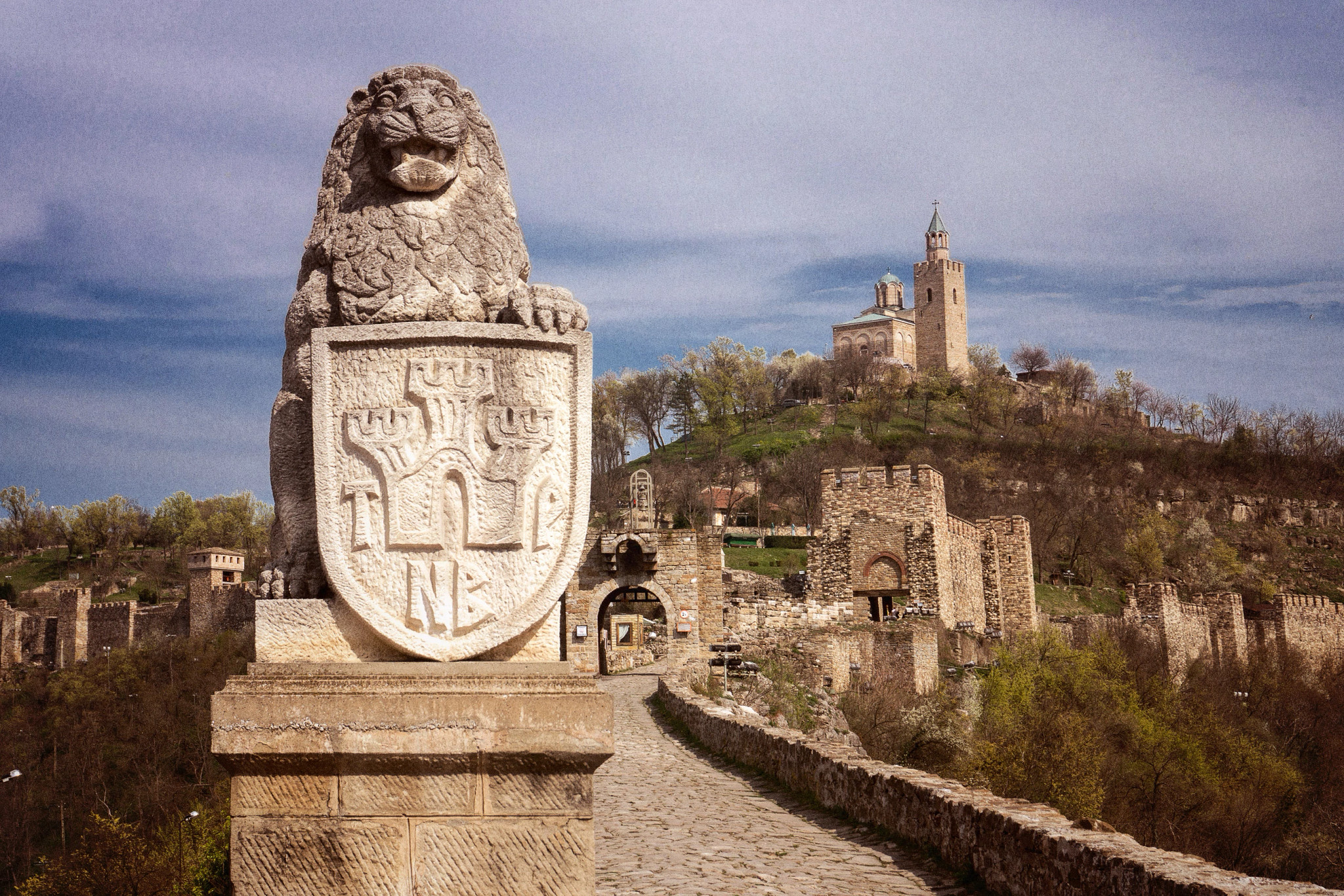
Golubac Fortress in Serbia is perhaps the most dramatic of them all. Eight hundred years old and positioned at the entrance to the Đerdap Gorge, it rises beside the river in a cluster of towers that would not look out of place in Game of Thrones. Its history is every bit as complicated.
The fortress became a prize in the long struggle between medieval Serbian rulers, Hungarians and the advancing Ottoman Empire. One of its central figures was Stefan Lazarević, the Serbian prince and despot who spent much of his reign negotiating, fighting or forming uneasy alliances with more powerful neighbours. The Ottomans, meanwhile, were seldom far away and rarely arrived with sightseeing in mind.
Inside, displays of armour, blades, bows and other gruesome implements demonstrate how defenders and attackers went about their business. Medieval warfare appears to have required equal measures of courage, brutality and a surprising reliance on strong, intact teeth, since poor dental health could quickly become life-threatening in an era without modern medicine.
Further upriver, the Hungarian city of Pécs offers a welcome change of mood. Reached by coach from our berth at Mohács, the city is characterised less by fortifications than by places of worship, grand civic buildings and the architectural leftovers of successive empires.
At its heart stands the Roman Catholic Cathedral Basilica of Saints Peter and Paul. Vast, ornate and repeatedly damaged, altered and rebuilt, it has endured a typically eventful European history. Although its foundations reach back many centuries, much of the structure we see today dates from the late 19th century.
The city’s Christian heritage extends much deeper. Beneath modern Pécs lies the UNESCO World Heritage-listed Early Christian Necropolis of Sopianae, a collection of decorated tombs, burial chambers and mausoleums dating largely from the 4th century, when this was a Roman provincial settlement.
Above ground, faiths and empires continue to overlap. The former Mosque of Pasha Qasim, built during Ottoman rule and later converted into a church, dominates Széchenyi Square. The cross now rises above a building that still carries the unmistakable form of a mosque.
Around it, Pécs has dressed for Christmas. Market stalls, lights and decorations fill the square, and the smell of hot food and spiced drinks drifts between the buildings. After so many dungeons, weapons and embattled ramparts, a cup of mulled wine feels like progress.
Warmth On The Water:
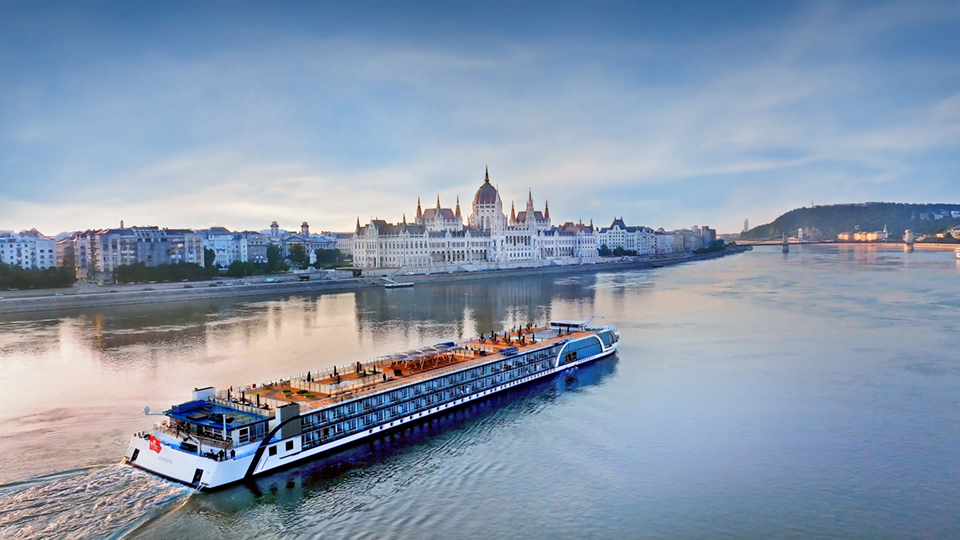
Our base for this journey is AmaMagna, AmaWaterways’ 135-metre flagship and, at almost twice the width of a conventional river vessel, the largest cruise ship operating on the Danube. It carries up to 196 passengers but rarely feels crowded, thanks largely to its generous public areas and four dining venues.
As the temperatures hover around zero, the expansive sun deck is more admirable in theory than in practice. I venture outside in short, optimistic bursts before retreating indoors with numb fingers and renewed respect for medieval sentries.
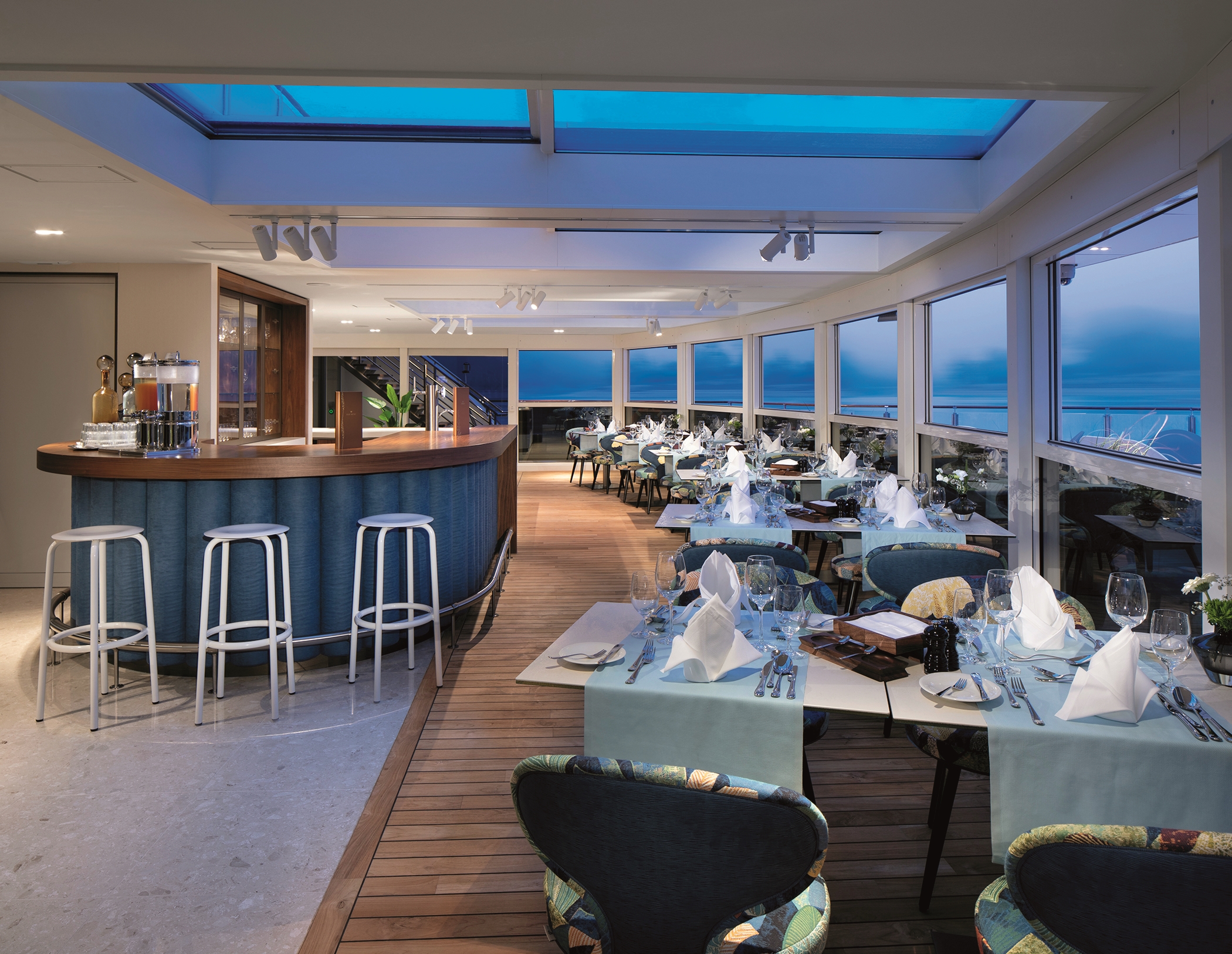
The forward-facing Al Fresco restaurant proves a much more civilised place to watch the river. Sunlight streams through the windows when the clouds allow, while vegetarian dishes provide a temporary sense of virtue after the more sumptuous offerings elsewhere on board.
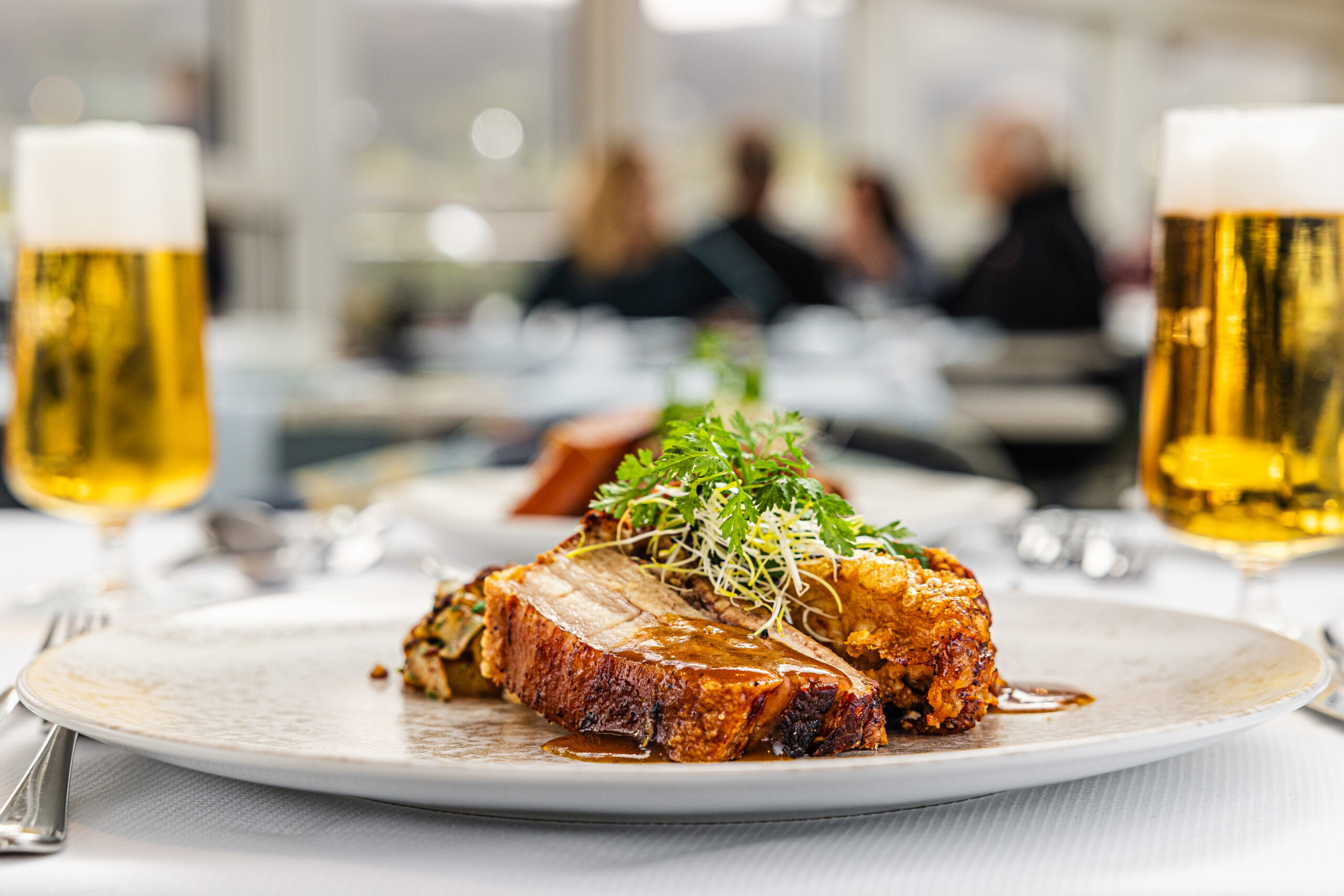
The Main Restaurant is consistently reliable, but the intimate Chef’s Table delivers the more theatrical dining experience, with a procession of carefully presented courses served as the winter landscape slips past beyond the glass.
Pre-Christmas festivities add further warmth. There are decorations, special menus, and enough seasonal cheer to make the dark afternoons feel deliberate rather than meteorological.
Outside, AmaMagna noses westward against the Danube’s lazy current towards two of the journey’s great capitals: Belgrade and Budapest. Both spent decades behind the ideological divide once known as the Iron Curtain, though their paths through the 20th century were markedly different. Today, each is engaged in its own form of reinvention.
Belgrade’s Scars & Saints:
Belgrade, the more sombre of the two, is the Serbian capital and has occupied a strategic position at the confluence of the Danube and Sava rivers for centuries, which is another way of saying it has been invaded, destroyed and rebuilt more times than seems reasonable.
It still carries scars from the Second World War, the breakup of Yugoslavia and the NATO bombing campaign of 1999. The city does not dwell entirely in the past, but neither has it concealed it.
One of its most striking landmarks is the Church of Saint Sava, a colossal Serbian Orthodox church that has been under construction, in one form or another, since the 1930s. Political upheaval, war and limited funds repeatedly interrupted the project, and even now finishing touches are still being applied.
From outside, its pale stone walls and green domes dominate the surrounding neighbourhood. Inside, the scale is almost disorientating. Soaring arches shimmer with gold mosaics and religious imagery, while the vast nave rises beneath a dome approximately 30 metres across and some 70 metres above the floor.
Christian or otherwise, it is difficult not to feel diminished by it. This intenional grandeur, presumably, is part of the design.
Budapest Reborn:
Budapest provides a fitting finale with the twin settlements of Buda and Pest facing each other across the Danube, stitched together by bridges and a shared talent for architectural grandeur. Much of the city was devastated during the Second World War, yet it has risen from the wreckage to become one of Europe’s most handsome capitals.
Neo-Gothic spires, Art Nouveau flourishes, Baroque facades and Romanesque arches jostle for attention. Only the multinational logos at street level remind us that these palaces of commerce now contain international fashion chains, coffee franchises and mobile phone shops.
One building holds particular significance for me. On my only previous visit to Budapest, about 15 years earlier, I stumbled upon Párisi Udvar, or the Parisian Passage, a short walk from the Erzsébet Bridge on the Pest side of the river.
The building was dark and apparently abandoned. Inside, I tenatively strolled the extraordinary central arcade, its elaborate arches and glass ceiling clearly once announcing a prestigious retail area. Even in neglect, it was magnificent.
The passage was inspired by the covered shopping galleries of Paris and evolved from an earlier commercial building associated with architect Mihály Pollack. The later structure, completed in the early 20th century, became one of Budapest’s most lavish retail spaces before years of inattention reduced it to a ghost of its former self. I had always wondered what became of it.
This time I find the doors open, the lights blazing and the interior restored to a degree of splendour that borders on the indecent. Párisi Udvar has been reborn as a five-star hotel in The Unbound Collection by Hyatt, its mosaics, stained glass, carved details and soaring arcade polished back to life. The queue for its eponymous café stretches along the street.
For a glimpse of the building in its darker days, watch the 2011 film Tinker Tailor Soldier Spy. Párisi Udvar appears as the gloomy café where Mark Strong’s character meets an unfortunate end. Today, the most immediate danger appears to be the price of coffee.
Standing beneath its glittering arcade, I am struck by how neatly the building reflects the Danube itself. Empires rise, governments collapse, borders move and buildings fall into decay. Then someone arrives with money, optimism and a battalion of skilled tradespeople, and the whole story begins again.
Life along the river is now far removed from the turbulent centuries recalled by its fortresses, tombs and battlefields. The castles have become museums, the dungeons contain mannequins and the old frontiers are crossed by cruise ships rather than invading armies.
Back at Baba Vida, our two forlorn prisoners remain behind bars, awaiting a sentence that will never come. That is probably where they belong.
Facts:
Founded in 2002 by three families, AmaWaterways now cruises the world’s most famous rivers through Europe, Asia, Africa and South America.
Constantly expanding its fleet, AmaWaterways now has around 34 vessels across the globe with the aim of 50 by the decade’s end.
The flagship, AmaMagna, is twice the width of most river cruise vessels, affording significantly more capacity for both suites and public spaces while still retaining the typical passenger counts and the expected intimacy of river cruising.